

Physical health
Physical wellbeing | Taha Tinana looks different for everyone, but it’s how your body feels, how you care for it, how you move, and how you nourish it.
Move
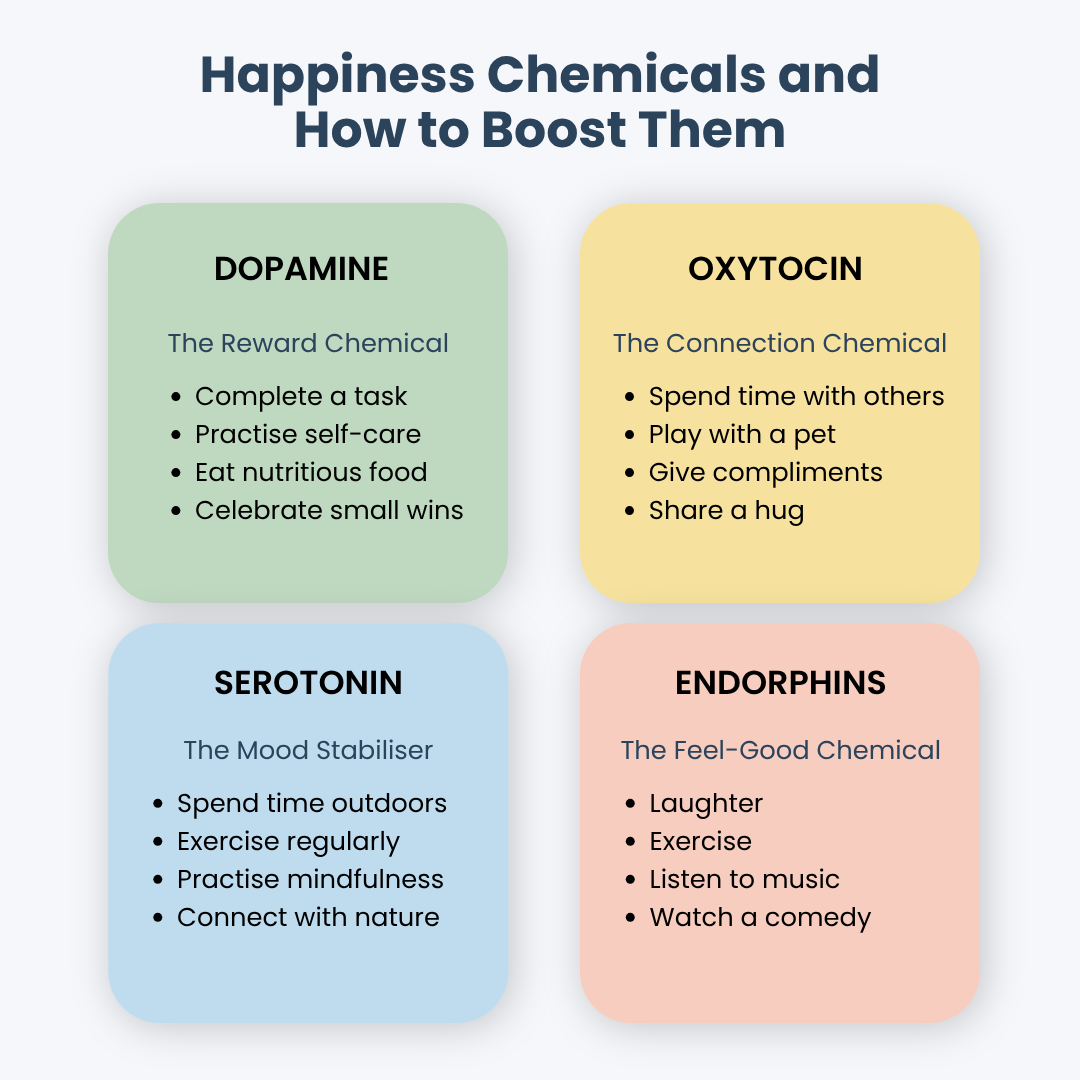
Moving your body every day, in a way that works for you, has many benefits. Any physical activity has benefits not only for your body but also for your mental health. This is because when our heart rate increases, it helps to trigger the release of “happy hormones” (endorphins) and mood stabilisers (dopamine and serotonin). Endorphins are our body's natural pain and stress relievers.
Local resources
Check out local resources or places you can enjoy:

Eating well
Good food = good mood
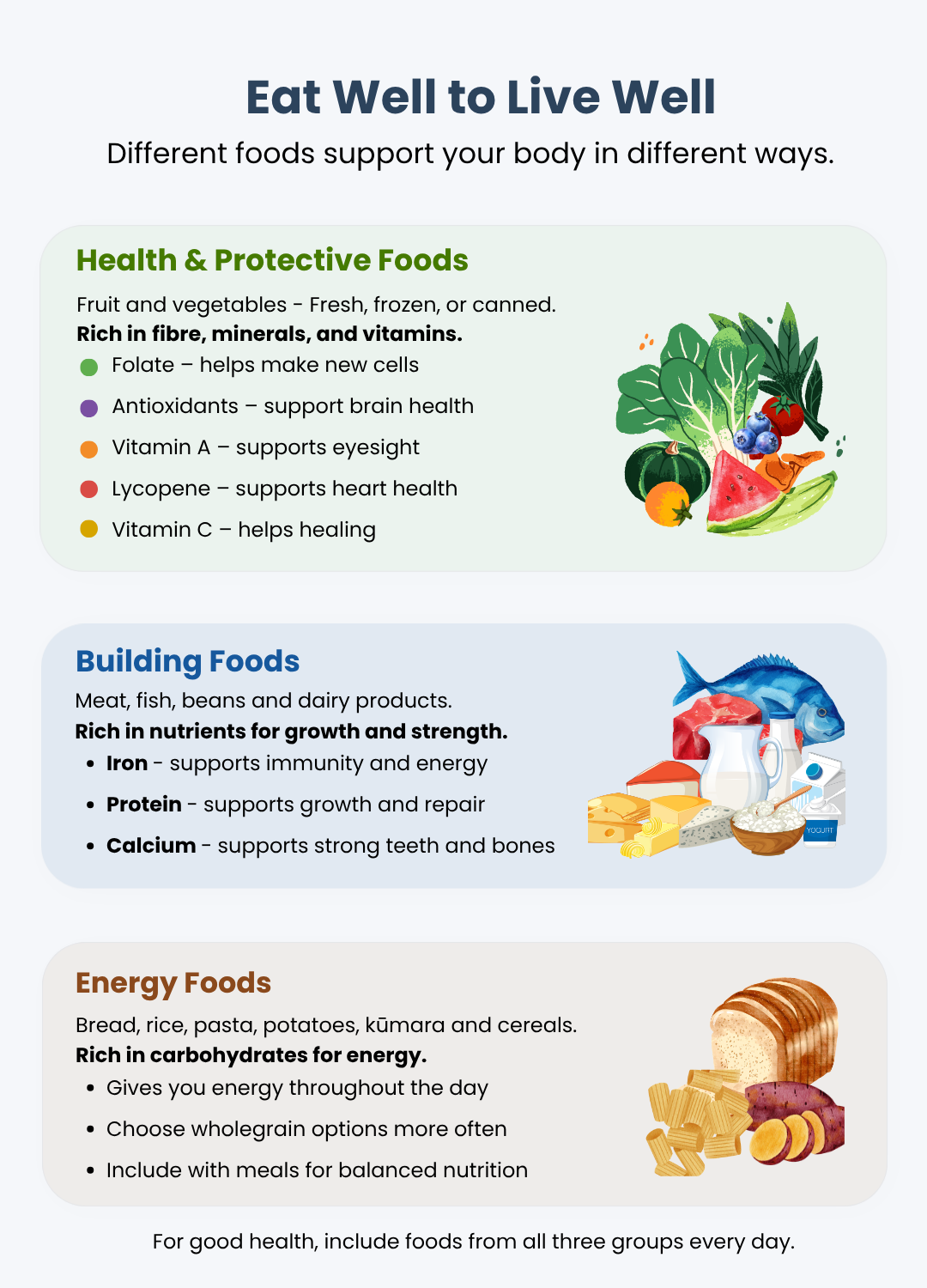
The brain uses more energy than any other part of your body. Eating well means finding the right balance of nutrients to enable your body to function efficiently and fuel the brain.
Investing a little time, thought and effort into your meals will increase your energy levels, enable you to concentrate fully on your studies, and allow you to be the best you possibly could be.
The the poster below as an example of how a balanced diet helps our bodies to be healthy and working well.
Healthy eating and wellbeing
Refer to these links if you want to learn more about eating disorders and how food affects your mood.

Sleeping well
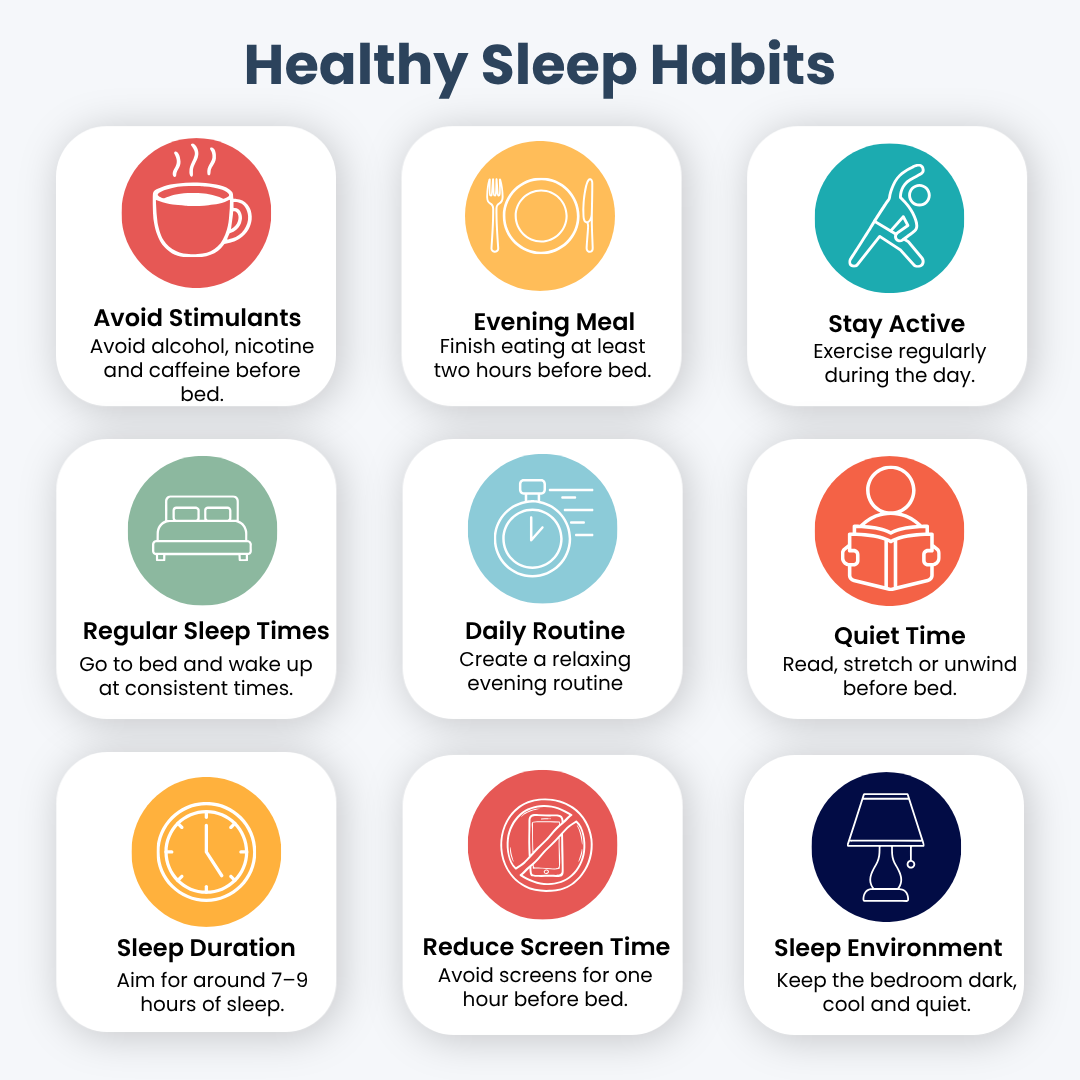
Good quality sleep is a vital part of good health. Sleep allows the body and brain to recover from the physical and mental activities of the day.
Mindfulness and meditation apps
Apps to support wellbeing, reduce stress, improve sleep, and stay focused while studying.

Self-care and personal hygiene
Personal hygiene involves self-care habits and routines that keep you clean, help to prevent illness, and help maintain physical and mental wellbeing.
Good Hygiene and mental health
Four reasons why feeling clean is good for both body and mind.
Study space
Your study space is key in supporting your wellbeing while studying.
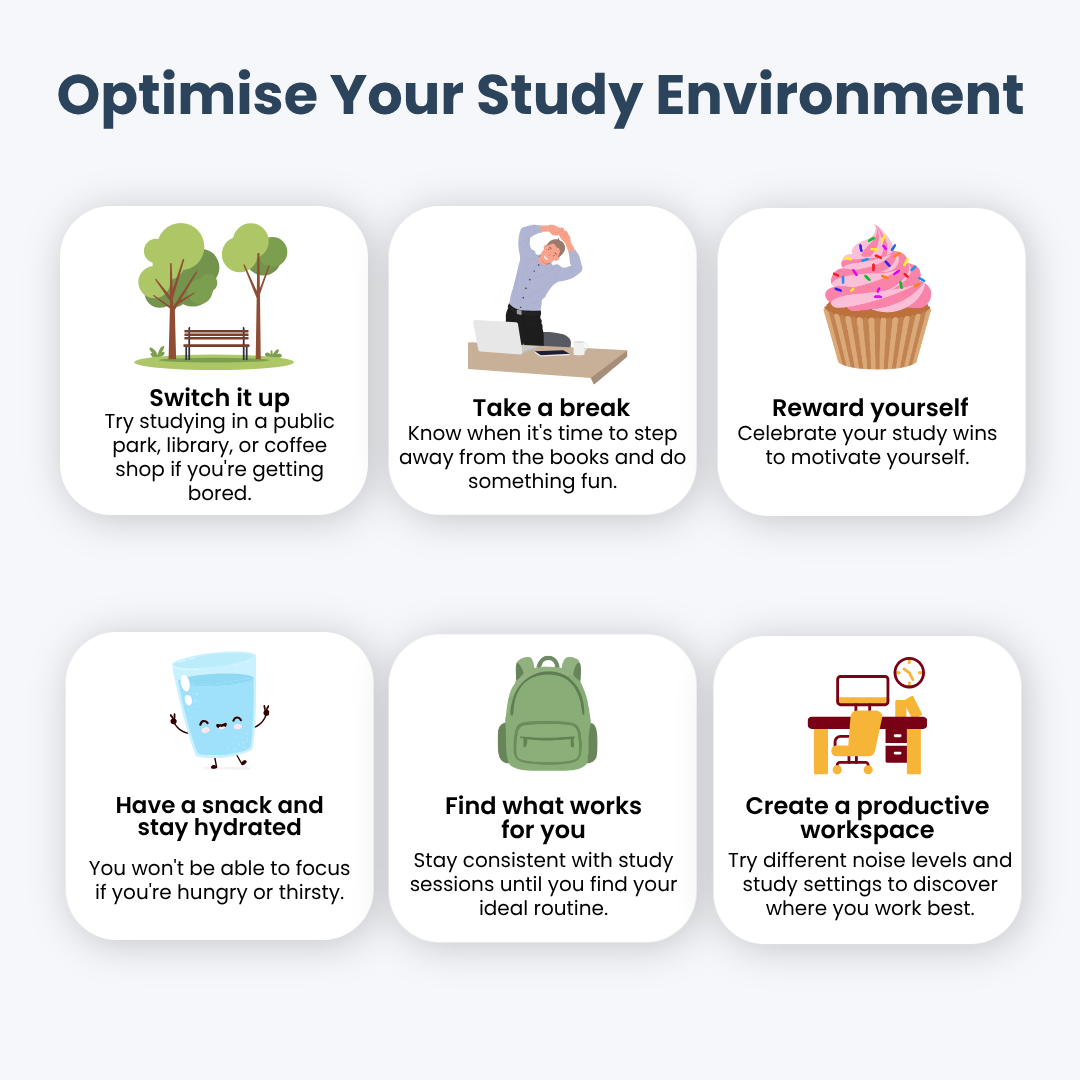
The more we can optimise where we study, the more likely our brains are able to maintain focus and retain information.
Set yourself up to study well
Use these simple tips to improve your focus, stay organised, and make your study time more productive.
Think about your study space—your chair, desk, lighting, fresh air, and temperature. For example, raise your laptop to create a standing desk and work near natural light.
Close unnecessary apps and browsers, silence notifications, place your phone out of reach, and use headphones.
Break work into manageable chunks and identify 1–2 clear goals for each study session and name specific activities for that session.
Have everything ready before you start: books, wifi, laptop, chargers, notes, paper, pens, water, snacks, etc.
Attributions
This work includes material from the following sources, in order of appearance:
Happiness chemicals and how to hack them infographic, adapted from an article published in the Journal of Curiosity, Imagination and Inspiration on Medium. Source: Unleash Your Happiness: How to Activate Your Four Powerful Chemicals
Giant water lily leaves image by donauwood_de. Retrieved from https://pixabay.com/photos/giant-water-lily-leaves-nature-8197012/. Licensed under Pixabay.com licence
Eat well to live well infographic, adapted from Health New Zealand | Te Whatu Ora's Eat Well to Live Well resource. Source: Eat well to live well – HealthEd
Vegetables by Mali Maeder. Retrieved from https://www.pexels.com/photo/agriculture-beans-corn-food-142520/.Licensed under Pexels.com licence
Lotus image by ha11ok. Retrieved from https://pixabay.com/users/ha11ok-1785462/?utm_source=link-attribution&utm_medium=referral&utm_campaign=image&utm_content=1205631. Licensed under; Pexels.com license
Sleep infographic adapted from the Heart Foundation's Sleep Routine resource. Source: https://www.heartfoundation.org.nz/educators/edu-resources/sleep-routine
Optimise your study environment infographic, adapted from Robertson College. Source: How to Study Effectively