

Social and whānau health
Social health | Taha whānau includes all or your relationships, intimate and social, with whānau, friends, colleagues and community. Relationships evolve over time with new connections being formed. It is the quality of your relationships that have the most benefit.
Connecting with community
OP students have access to clubs and socs. Groups are available to join to build a community and network of support. See what’s available: OUSA Clubs and Societies
Unipol Recreation offers a huge choice of recreational activities, including group fitness, outdoor rental and social sport: Unipol Recreation
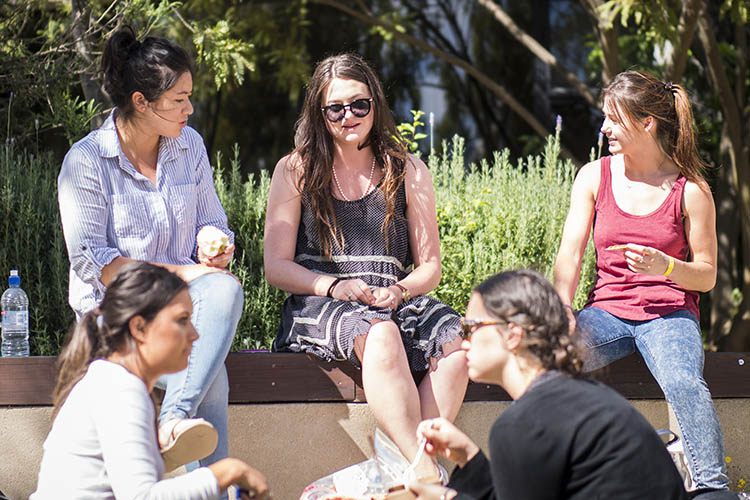
Regular lunches and events are held for the following groups:
- Accessibility / Delishability
- Pasifika
- Poho
- Rainbow
- Former refugee
- Parents lunch
Positive relationships
Healthy relationships with friends, family, classmates, flatmates, or colleagues play a big part in our overall wellbeing. Strong, supportive relationships help us to feel grounded, understood, and connected. Small actions can make a big difference in strengthening the relationships that matter most.
There are simple ways to maintain and build positive relationships:
- Spending time with people who lift you up
- Reaching out to a friend you haven’t spoken to in a while
- Checking in with those you live or study with
- Practising healthy, open communication
- Recognising and using healthy boundaries
Visit The Lowdown for more support and resources.
Flatting Issues
Finding a flat, moving in, and living with a new or existing group of friends can be an exciting and liberating experience. Occasionally however, friendships/relationships can break down, or you may need to leave the flat for other reasons resulting in issues with tenancy agreements.

Homesickness
Homesickness is a natural response to change. When you move away from familiar people, places, and routines, it’s normal to feel a sense of loss or longing for home. These feelings often come from missing comfort, security, and connection, but they usually ease as you settle into your new environment.
Managing homesickness
If you're feeling homesick, small actions can help you feel more comfortable and connected. The ideas below may help you settle in, build new routines and make your surroundings feel more like home. There’s no single “right” way to cope, so try what feels right for you.
Start with a simple hello.
Something to look forward to.
Find calm and grounding.
It’s okay to let it out!
Even if you’re unsure, it’s a great way to socialise.
Giving back can help you feel connected.
Add personal touches, photos, or decorations.
Express your thoughts and feelings.
A little familiarity can help.
Share how you’re feeling with a friend or support services.
Homesickness takes time to ease.
Rest and recharge when you need to
Meet people with similar interests.
Discover local cafés, parks, or attractions.
Cook or order something that reminds you of home.
Need to talk to someone?
If homesickness is affecting your wellbeing or studies, OP Student Support Services can provide support, guidance, and someone to talk to. Make an appointment using the link below.
Bullying
Otago Polytechnic is committed to providing a safe working and learning environment in which all staff and students are treated with respect.
Harassment
Harassment is conduct which is unwelcome or offensive to the recipient in relation to their race, colour, ethnic or national origins, gender, gender identity, age, disability, physical appearance, marital or family status, religion, ethical belief, union participation/non/participation, political opinion or sexual orientation.
Bullying
Bullying is unwelcome and unreasonable behaviour which includes victimisation, humiliation, undermining or threatening behaviours and may involve the actions of an individual or a group. It creates an uncomfortable or hostile environment for those who are a target of bullying.
Cyberbullying
Cyberbullying is bullying that happens online through social media, messaging apps, email, gaming platforms, or other digital technologies. It can include hurtful messages, threats, spreading rumours, sharing private information, excluding someone from online groups, or repeated unwanted contact.
If this happens to you:
- save screenshots or other evidence
- block and report the behaviour where possible
- talk to someone you trust
Who to talk to if you are harassed or bullied
|
Student Success and Te Punaka Ōwheo teams |
A trusted friend, whānau member, or support person |
|
Your kaiako |
Head of School, College or Programme Manager or Programme Leader |
|
Hall supervisor or residential assistant |
|

Your rights are important
Find support and understand your rights:
Intimate relationships
Being sexually healthy means understanding your body, being aware of the choices you have and having control over the decisions you make regarding your sexual relationships.
Consent is a clear, freely given "yes" and can be withdrawn at any time.
What is consent?
Consent is a clear, freely given “yes” to participating in any activity—physical, emotional, or sexual. It means everyone involved understands what’s happening, feels comfortable, and has the choice to say yes or no without pressure, guilt, or fear.
Consent must be:
no pressure.
everyone knows what they’re agreeing to.
saying yes to one thing doesn’t mean yes to everything.
anyone can change their mind at any time.
a real, comfortable yes, not silence or uncertainty.
listening, and respecting boundaries helps create safer, more positive connections for everyone.
Get support
There are a huge range of organisations and people who can offer help, information, and resources for family violence, sexual harm, sexual health, and wellbeing.
| Family and sexual harm (Health New Zealand) - Resources and support for family and sexual harm. |
| Te Whare Tawharau - University of Otago service supporting those affected by sexual violence. |
| Ōtepoti Whānau Refuge Services - Supporting whānau affected by family violence in Ōtepoti. |
| Shakti - Supporting migrant and refugee women of Asian, African, and Middle Eastern origin. |
| Shielded - Online tool helping people experiencing family violence access support safely and privately. |
| Are You OK - Free 24/7 support line for anyone affected by family violence. |
| Safe to Talk - Free 24/7 support line for anyone affected by sexual harm. |
| Sexual health (Healthify) - Manage sexual health. |
| Just the facts - Guide to sexual health and STIs. |
| Contraception (Sexual Wellbeing Aotearoa) - Contraception and reproductive health. |
Attributions
This work includes material from the following sources, in order of appearance:
Landing page image: Friends sitting on a blanket by Maksim Goncharenok. Licensed under Pexels.com licence
Hero image: Moss nature forest by DavidColde. Retrieved from https://pixabay.com/photos/moss-nature-forest-green-dew-drops-10327647/. Licensed under Pixabay.com license.
Young people's arms around each other by Dimhou. Retrieved from https://pixabay.com/photos/young-people-group-friends-3575167/ Licensed under Pixabay.com license.